Off the Top: Information Design Entries

Showing posts: 16-30 of 135 total posts


5 February 2008

Social Computing Summit in Miami, Florida in April, 2008

ASIS&T has a new event they are putting on this year, the Social Computing Summit in Miami, Florida on April 10-11, 2008 (a reminder page is up at Yahoo's Upcoming - Social Computing Summit). The event is a single-track event on both days with keynote presentations, panels, and discussion.

The opening keynote is by Nancy Baym. I have been helping assist with organization of the Social Computing Summit and was asked by the other organizers to speak, which I am doing on the second day. The conference is a mix of academic, consumer, and business perspectives across social networking, politics, mobile, developing world, research, enterprise, open social networks (social graph and portable social networks) as well as other subjects. The Summit will be a broad view of the digital social world and the current state of understanding from various leaders in social computing.

There is an open call for posters for the event that closes on February 25, 2008. Please submit as this is looking to be a great event and more perspectives and expertise will only make this event more fantastic.


10 January 2008

Posting Elements of the Social Software Stack

I have been working for quite on finding a good way to explain the elements in the social software stack (or most of the important ones). I have blogged the result of the work as The Elements in the Social Software Stack (comments are open there).

In my public and in-house workshops I have worked through various graphics from others and my own to work as a foundation for talking to and through the subject. In November I finally sat down (in a hallway open space) the day before my workshop at the IA Konferenz in Stuttgart, Germany. It had all the elements that are part of a solid foundation, in progressive order:

  1. Identity
  2. Object (social object)
  3. Presence
  4. Actions
  5. Sharing
  6. Reputation
  7. Relationships
  8. Conversation
  9. Groups
  10. Collaboration

This and one other post that is in the works are becoming the corner stones for my work helping start-ups and enterprise work through social software (social computing) to properly solve their problems and address the issues at hand. It has also been the foundation for rethinking (mostly more clearly thinking about) social bookmarking and folksonomy. I am rewriting the work I have done toward the book based on these two pieces as it is making the communication of concepts clearer.

Who Does This Help?

People looking at the social software services should have a solid idea of the central elements, identity and the social object. After that it is a building process to account for the other elements leading up to the services full offerings. Social bookmarking (folksonomy related services) should get up to or include conversation. Tools like Ma.gnolia go up to groups for their social bookmarking service and they cover the elements leading up to that end point.

There is more that can be fleshed out in this, but it is a foundation and a starting point. The next piece will build on this posting and should be a good foundation for understanding.

Still here? Go read The Elements in the Social Software Stack :: Personal InfoCloud and offer constructive feedback. Thank you.


3 November 2007

Can Facebook Change Its DNA

I wrote and posted Can Facebook Change Its DNA as a follow-up to for Business or LinkedIn Gets More Valuable regarding the changes needed in Facebook if it wants to be valuable (or have optimal value) for the business world.


18 October 2007

The State of Enterprise Social Software - Pointer

I have written and posted The State of Enterprise Social Software on my Peronal InfoCloud blog as it has comments on and it also is where I am trying to keep my more professional pieces.

This blog post is a reaction to Richard McManus excellent post Big Vendors Scrap for Enterprise 2.0 Supremacy. The post seemed less about supremacy than scapping to be relevant. Many of the tools I am quite or somewhat familiar with and rather unimpressed. But, go read the other post to find my assessments of the tools, but also the tools that are doing much better jobs than the traditional enterprise vendors.


25 August 2007

Reading Information and Patterns

The past few weeks and months the subject of reading, analysis, and visualization have been coming up a lot in my talking and chatting with people. These are not new subjects for me as they are long time passions. Part of the discussion the past few weeks have been focussed on what is missing in social bookmarking tools (particularly as one's own bookmarks and tags grows and as the whole service scales) as wells as group discussion monitoring tools, but this discussion is not the focus of this post. The focus is on reading, understanding, and synthesis of information and knowledge.

Not that Reading

I really want to focus on reading. Not exactly reading words, but reading patterns and recognizing patterns and flows to get understanding. After we learn to read a group of letters as a word we start seeing that group of letters as a shape, which is a word. It is this understanding of patterns that interact and are strung together that form the type of reading I have interest in.

Yesterday, Jon Udell posted about analyzing two gymnasts make turns. He was frustrated that the analysis on television lacked good insight (Jon is a former gymnast). Jon, who is fantastic at showing and explaining technologies and interactions to get to the core values and benefits as well as demoing needed directions, applied his great skill and craft on gymnastics. He took two different gymnasts doing the same or similar maneuver frame-by-frame. Jon knew how to read what each gymnast was doing and shared his understanding of how to read the differences.

Similarly a week or so ago an article about the Bloomberg Terminal fantasy redesign along with the high-level explanations and examples of the Bloomberg Terminal brought to mind a similar kind of reading. I have a few friends and acquaintances that live their work life in front of Bloomberg Terminals. The terminals are an incredible flood of information and views all in a very DOS-looking interface. There is a skill and craft in not only understanding the information in the Bloomberg Terminal, but also in learning to read the terminal. One friend I chatted with while he was working (years ago) would glance at the terminal every minute. I had him explain his glancing, which essentially was looking for color shifts in certain parts of the screen and then look for movement of lines and characters in other areas. He just scanned the screen to look for action or alerts. His initial pass was triage to then discern where to focus and possibly dive deeper or pivot for more related information.

The many of the redesign elements of the Bloomberg Terminals understood the reading and ability to understand vast information (in text) or augmented the interface with visualizations that used a treemap (most market analysts are very familiar with the visualization thanks to SmartMoney's useage). But, the Ziba design was sparse. To me it seemed like many of the market knowledge workers used to the Bloomberg Terminal and knew how to read it would wonder where their information had gone.

Simplicity and Reading with Experience

The Ziba solution's simplicity triggers the need in understanding the balance between simplicity just breaking down the complex into smaller easy to understand bits and growing into understanding the bits recollected in a format that is usable through recognition and learned reading skills. The ability to read patterns is learned in many areas of life in sport, craft, and work. Surfers look at the ocean waves and see something very different from those who do not surf in the ebb, flow, breaks, surface currents and under currents. Musicians not only read printed music but also hear music differently from non-musicians, but formally trained musicians read patterns differently from those who have just "picked it up". There has been a push in business toward data dashboards for many years, but most require having the right metrics and good data, as well as good visualizations. The dashboards are an attempt to provide reading information and data with an easier learning curve through visualization and a decreased reliance on deep knowledge.

Getting Somewhere with Reading Patterns

Where this leads it there is a real need in understanding the balance between simplicity and advanced interaction with reading patterns. There is also a need to understand what patterns are already there and how people read them, including when to adhere to these patterns and when to break them. When breaking the patterns there needs to be simple means of learning these new patterns to be read and providing the ability to show improved value from these new patterns. This education process can be short video screen shots, short how-to use the interface or interactions. Building pattern libraries is really helpful.

Next, identify good patterns that are available and understand why they work, particularly why they work for the people that use then and learn how people read them and get different information and understanding through reading the same interface differently. Look at what does not work and where improved tools are needed. Understand what information is really needed for people who are interested in the information and data.
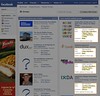
Facebook | GroupsAn example of this is Facebook, which has a really good home page for each Facebook member, it is a great digital lifestream of what my friends are doing. It is so much better at expressing flow and actions the people I have stated I have social interest in on Facebook than any other social web tool that came before Facebook. Relative to the individual level, Facebook fails with its interface of the information streams for its groups. Much of the content that is of interest in Facebook happens in the groups, but all the groups tell you is the number of new members, new messages, new videos, and new wall posts. There is much more valuable information tucked in there, such as who has commented that I normally interact with, state the threads that I have participated in that have been recently updated, etc.

This example illustrates there needs to be information to read that has value and could tell a story. Are the right bits of information available that will aid understanding of the underlying data and stories? It the interface helpful? Is it easy to use and can it provide more advanced understanding? Are there easy to find lessons in how to read the interface to get the most information out of it?


20 August 2007

Why Ma.gnolia is One of My Favorite Social Bookmarking Tools

After starting the Portable Social Network Group in Ma.gnolia yesterday I received a few e-mails and IMs regarding my choice. Most of the questions were why not just use tags and del.icio.us. After I posted my Ma.Del Tagging Bookmarklet post I have had a lot of questions about Ma.gnolia and my preference as well as people thought I was not a fan of it. I have been thinking I would blog about my usage, but given my work advising on social bookmarking and social web, I shy away talking about what I use as what I like is likely not what is going to be a good fit for others. But, my work is one of the reasons I want to talk about what I like using as nearly every customer of mine and many presentation attendees look at del.icio.us first (it kicked the door wide open with a tool that was light years ahead of all others), but it is not for everybody and there are many other options. Much of my work is with enterprise and organizations of various size, which del.icio.us is not right for them for privacy reasons. I still add to del.icio.us along with my favorite as there are many people that have subscribed to the at feed as they derive value from that subscription so I take the extra step to keep that feed as current.

Ma.gnolia Offers Great Features for Sociality

I have two favorite tools for my own personal social bookmarking reasons Ma.gnolia and Clipmarks (I don't think I have anything publicly shared in Clipmarks). First the later, I use Clipmarks primarily when I only want to bookmark a sub-page element out on the web, which are paragraphs, sentences, quotes, images, etc.

I moved to try Ma.gnolia again last Fall when something changed in del.icio.us search and the results were not returning things that were in del.icio.us. My trying Ma.gnolia, by importing all of my 2200 plus bookmarks not only allowed me to search and find things I wanted, but I quickly became a fan of their many social features. In the past year or less they have become more social in insanely helpful and kind ways. Not only does Ma.gnolia have groups that you can share bookmarks with but there is the ability to have discussions around the subject in those groups. Sharing with a group is insanely easy. Groups can be private if the manager wishes, which makes it a good test ground for businesses or other organizations to test the social bookmarking waters. I was not a huge fan of rating bookmarks as if I bookmarked something I am wanting to refind it, but in a more social context is has value for others to see the strength of my interest (normall 3 to 5 stars). One of my favorite social features is giving "thanks", which is not a trigger for social gaming like Digg, but is an interpersonal expression of appreciation that really makes Ma.gnolia a friendly and positive social environment.

Started with Beauty, but Now with Ease

Ma.gnolia started as a beautiful del.icio.us (it was not the first) and the beauty got in the way of usability for many. But, Ma.gnolia has kept the beautiful strains and added simple ease of use in a very Apple delightful moments sort of way. The thanks are a nice treat, but the latest interactions that provide non-disruptive ease of use to accomplish a task, without completely taking you away from your previous flow (freaking brilliant in my viewpoint - anything that preserves flow to accomplish a short task is a great step). Another killer feature is Ma.gnolia Roots, which is a bookmarklet that when clicked hovers a semi-transparent layer over the webpage to show information from Ma.gnolia about that page (who has linked to it, tags, annotations, etc.) and makes it really easy to bookmark that page from that screen. The API (including a replica of the del.icio.us API that nearly all services use as the standard), add-ons, Creative Commons license for your bookmarks, many bookmarklet options, and feed options. But, there are also the little things that are not usually seen or noticed, such as great URLs that can be easily parsed, all pages are properly marked up semantically, and Microformats are broadly and properly used throughout the site (nearly at every pivot).

Intelligently Designed

For me Ma.gnolia is not only a great site to look at, a great social bookmarking site that is really social (as well as polite and respectful of my wishes), but a great example for semantic web mark-up (including microformats). There is so much attention to detail in the page markup that for those of us that care it is amazingly beautiful. The visual layer can be optimized for more white space and detail or for much easier scrolling. The interactions, ease of use, and delightful moments that assist you rather than taking you out of your flow (workflow, taskflow, etc.) and make you ask why all applications and social sites are not this wonderful.

Ma.gnolia is not perfect as it needs some tools to better manage and bulk edit your own bookmarks. It could use a sort on search items (as well as narrow by date range). Search could use some RedBull at times. It could improve with filtering by using co-occurance of tag terms as well as for disambiguation.

Overall for me personally, Ma.gnolia is a tool I absolutely love. It took the basic social bookmarking idea in del.icio.us and really made it social. It has added features and functionality that are very helpful and well executed. It is an utter pleasure to use. I can not only share things easily and get the wonderful effects of social interaction, but I can refind things in my now 2,500 plus bookmarks rather easily.


24 July 2007

Sharing and Following/Listening in the Social Web

You may be familiar with my granular social network post and the postings around the Personal InfoCloud posts that get to personal privacy and personal management of information we have seen, along with the Come to Me Web, but there is an element that is still missing and few social web sites actually grasp the concept. This concept is granular in the way that the granular social network is granular, which focusses on moving away from the concept of "broad line friends" that focus on our interest in everything people we "friend", which is not a close approximation of the non-digital world of friend that we are lucky to find friends who have 80 percent common interests. This bit that is missing focusses on the sharing and following (or listening) aspects of our digital relationships. Getting closer to this will help filter information we receive and share to ease the overflow of information and make the services far more valuable to the people using them.

Twitter Shows Understanding

Twitter in its latest modifications is beginning to show that it is grasping what we are doing online is not befriending people or claiming friend, but we are "following" people. This is a nice change, but it is only part of the equation that has a few more variables to it, which I have now been presenting for quite a few years (yes and am finally getting around to writing about). The other variables are the sharing and rough facets of type of information we share. When we start breaking this down we can start understanding the basic foundation for building a social web application that can begin to be functional for our spheres of sociality.

Spheres of Sociality

Spheres of Sociality The Spheres of Sociality are broken into four concentric rings:

  1. Personal
  2. Selective
  3. Collective
  4. Mob

There are echos of James Surowiecki's Wisdom of Crowds in the Spheres of Sociality as they break down as follows. The personal sphere is information that is just for one's self and it is not shared with others. The selective sphere, which there may be many a person shares with and listens to, are closed groups that people are comfortable sharing and participating with on common interests (family, small work projects, small group of friends or colleagues, etc.). The collective sphere is everybody using that social tool that are members of it, which has some common (precise or vague) understanding of what that service/site is about. The last sphere is the mob, which are those people outside the service and are not participants and who likely do not understand the workings or terminology of the service.

These sphere help us understand how people interact in real life as well as in these social environments. Many of the social web tools have elements of some of these or all of these spheres. Few social web tools provide the ability to have many selective spheres, but this is a need inside most enterprise and corporate sites as there are often small project teams working on things that may or may not come to fruition (this will be a future blog post). Many services allow for just sharing with those you grant to be your followers (like Twitter, Flickr, the old Yahoo! MyWeb 2.0, and Ma.gnolia private groups, etc.). This selective and segmented group of friends needs a little more examination and a little more understanding.

Granular Sharing and Following

Unequal AccessThe concepts that are needed to improve upon what has already been set in the Spheres of Sociality revolve around breaking down sharing and following (listening) into more discernible chunks that better reflect our interests. We need to do this because we do not always want to listen everything people we are willing to share with are surfacing. But, the converse is also true we may not want to share or need to share everything with people we want to follow (listen to).

In addition to each relationship needing to have sharing and listening properties, the broad brush painted by sharing and listening also needs to be broken down just a little (it could and should be quite granular should people want to reflect their real interests in their relationships) to some core facets. The core facets should have the ability to share and listen based on location, e.g. a person may only want to share or listen to people when they are in or near their location (keeping in mind people's location often changes, particularly for those that travel or move often). The location facet is likely the most requested tool particularly for those listening when people talk about Twitter and Facebook. Having some granular categories or tags to use as filters for sharing and listening makes sense as well. This can break down to simple elements like work, play, family, travel, etc. as broad categories it could help filter items from the sharing or listening streams and help bring to focus that which is of interest.

Breaking Down Listening and Sharing for Items

 YourselfOthers
ShareYesYes/No

Where this gets us it to an ability to quickly flag the importance of our interactions with others with whom we share information/objects. Some things we can set on an item level, like sharing or just for self, and if sharing with what parameters are we sharing things. We will set the default sharing with ourself on so we have access to everything we do. This follows the Spheres of Sociality with just personal use, sharing with selective groups (which ones), share with the collective group or service, and share outside the service. That starts setting privacy of information that starts accounting for personal and work information and who could see it. Various services have different levels of this, but it is a rare consumer services that has the selective service sorted out (Pownce comes close with the options for granularity, but Flickr has the ease of use and levels of access. For each item we share we should have the ability to control access to that item, to just self or out across the Spheres of Sociality to the mob, if we so wish. Now we can get beyond the item level to presetting people with normative rights.

Listening and Sharing at the Person Level

 Others
Settings
Listen/FollowYesNo
Granular
Listen/Follow
YesNo
Granular ShareYesNo
Geo Listen/FollowYesNo
Geo ShareYesNo

We can set people with properties that will help use with default Sphere of Sociality for sharing and listening. The two directions of communication really must be broken out as there are some people we do not mind them listening to the selective information sharing, but we may not have interest in listening to their normal flow of offerings (optimally we should be able to hear their responses when they are commenting on items we share). Conversely, there may be people we want to listen to and we do not want to share with, as we may not know them well enough to share or they may have broken our privacy considerations in the past, hence we do not trust them. For various reasons we need to be able to decide on a person level if we want to share and listen to that person.

Granular Listening and Sharing

Not, only do we have needs and desires for filtering what we share and listen to on the person level, but if we have a means to set some more granular levels of sharing, even at a high level (family, work, personal relation, acquaintance, etc.). If we can set some of these facets for sharing and have them tied to the Spheres we can easily control who and what we share and listen to. Flickr does this quite well with the simple family, friends, contacts, and all buckets, even if people do not use them precisely as such as family and friends are the two selective buckets they offer to work with (most people I know do not uses them precisely as such with those titles, but it provides a means of selective sharing and listening).

Geo Listening and Sharing

Lastly, it is often a request to filter listening and sharing by geography/location access. There are people who travel quite a bit and want to listen and share with people that are currently local or will be local to them in a short period, but their normal conversations are not fully relevant outside that location. Many people want the ability not to listen to a person unless they are local, but when a person who has some relationship becomes local the conversation may want to be shared and/or listened to. These settings can be dependent on the granular listening and sharing parameters, or may be different.

Getting There...

So, now that this is out there it is done? Hmmm, if it were only so easy. The first step is getting developers of social web and social software to begin understanding the social relationships that are less broad lines and more granular and directional. The next step is a social interaction that people need to understand or that the people building the interfaces need to understand, which is if and how to tell people the rights granted are not reciprocal (it is seems to be a common human trait to have angst over non-reciprocal social interactions, but it is the digital realm that makes it more apparent that the flesh world).


22 May 2007

Getting to the Ultimate City Guide

This past week I was in Mexico City for work. My approach to the trip was filled with apprehension as I had never been there and much of the word of mouth and news of Mexico City was on the side of "express kidnappings and other non-cheery events. I pinged my Twitter friends and a couple people responded that they had been to Mexico City in the past year and offered great insights and advice (mostly not to hail taxis on the street and the usual advice for large cities (stay in busy areas, etc.)).

I did not have a lot of time to explore, but I really did enjoy my trip there. But, I was really not well prepared for the trip (mostly because it was rather last minute in a rather busy stretch of other non-related work).

The second day of my trip I felt far more comfortable as I had walked around my busy neighbohood getting a feel for it as I searched for food (there were many options, but I wanted local food not Korean or Argentinian). Walking around there were many offers for taxi rides, table dances, and flat-out prostitution offers. I had a fairly good shield of ignoring the individuals, but some were quite persistent. I found the early morning helped ground me a little better and found the buildings and architecture similar in a way to Bastia, Corsica. This tiny bit of grounding helped connect me to some understanding and provided a connection.

Most travel guide work better for me after I have been some place and preparing me for things I want to discover the next trip, than for preparing me for the first trip.

Trip Preparation and Pre-mapping

The trip was not the only trip I was not well prepared for, my trip to Berlin in Fall 2005 was much the same. But, with the Berlin trip I read and had many travel guide and nothing was really sticking (it too was in a busy travel and work schedule).

The travel guides really do not work well for me as I have nothing for the information to stick to. I have no reference point of familiarity for the information to adhere. Once I gain a foothold of perspective and foundation the information about a place starts making sense. All it takes is a drop of knowledge and the ripples of understanding and familiarity start taking hold.

What I really seem to need is that core grounding point. I have tried Google Earth and other satellite enhanced mapping systems (I am increasingly a fan of Microsofts Live Maps for this as its 3D models are quite helpful), but they still need some level of reference for the info to stick. Information combined with some 3D and 360 views of areas would help. Once I have a point I can hold onto I can then easily expand the knowledge.

The small bit of understanding makes unrolling surrounding areas and deeper understanding easier. For me the thin connection to Corsica helped put the architecture in context. This bit of context is like a Google Map showing an area then pre-loading other near and related information to unpack and apply quickly.

Personally, I like to have cultural understandings of things that are fixed and malleable. Fixed are things like phone systems (GSM) and ease of getting wifi or solid internet access, along with usual cost. Malleable are things that have options like places to eat, things to see and do, etc. Cultural components, like taking many photos in a neighborhood is something I like to understand, do people think a white guy (I was one of a handful I saw in my couple days) taking pictures of buildings and building details is a threat to them? Does this make me a sure target? Is it culturally improper?

Finding Guides that Fit Context

One of my issues is I am often traveling from a business context and need the fixed information. I find the Economist City Guides really good for the basic worklife understanding. I also have cultural (often sub-cultural) interest along the lines of use of technology, food, street art, local information design, social interaction patterns, etc., which seems to come from shared personal experience rather than printed resources.

Ultimate Guide

I think my optimal wish it to have an immersion guide experience prior to traveling, based on the location I will be staying. Then once I am in a location have information rolled out based on context, such as time to eat the food options based on my interest and level of adventure with which I am comfortable. Unrolling understanding and background based on surroundings for where I am and what is around the corner (literally and figuratively) would be fantastic.

This is a familiarity I now have with Amsterdam and parts of London. Some of this familiarity came from having a personal guide take me through those cities nearly 20 years ago. This provided me with an understanding of layout, core elements (transportation systems, cultural understanding, food, etc.), and comfort with a feel for the cities.

Most of the time I am ready for my first trip after going to a city once or have a fellow traveler guide me through their understanding of the city along with a local resident.


31 January 2007

It is Finally IT and Design in Enterprise (and Small Business)

My recent trip to Northern California to speak at the UIE Web App Summit and meetings in the Bay Area triggered some good ideas. One thread of discovery is Enterprise, as well as small and medium sized business, is looking at not only technology for solutions to their needs, but design.

IT Traditions

Traditionally, the CIO or VP IT (and related upper management roles) have focussed on buying technology "solutions" to their information problems. Rarely have the solutions fixed the problems as there is often a "problem with the users" of the systems. We see the technology get blamed, the implementation team get blamed (many do not grasp the solution but only how to install the tools, as that is the type of service that is purchased), and then the "users need more training".

Breaking the Cycle of Blame and Disappointment

This cycle of blame and disappointment in technology is breaking around a few important realizations in the IT world.

Technology is not a Cure All

First, the technology is always over sold in capability and most often needs extensive modification to get working in any environment (the cost of a well implemented system is usually about the same as a built from scratch solution - but who has the resources to do that). Most CIOs and technology managers are not trusting IT sales people or marketing pitches. The common starting point is from the, "your tool can not do what you state" and then discussions can move from there. Occasionally, the tools actually can do what is promised.

Many, decision makers now want to test the product with real people in real situations. Solution providers that are good, understand this and will assist with setting up a demonstration. To help truly assess the product the technical staff in the organization is included in the set-up of the product.

People and Information Needs

Second, the problems are finally being identified in terms of people and information needs. This is a great starting place as it focusses on the problems and the wide variety of personal information workflows that are used efficiently by people. We know that technology solutions that mirror and augment existing workflows are easily adopted and often used successfully. This mirroring workflow also allows for lower training costs (occasionally there is no training needed).

Design with People in Mind

Third, design of the interaction and interface must focus on people and their needs. This is the most promising understanding as it revolves around people and their needs. Design is incredibly important in the success of the tools. Design is not just if it looks pretty (that does help), but how a person is walked through the steps easily and how the tools is easy to interact with for successful outcomes. The lack of good design is largely what has crippled most business tools as most have focussed on appealing to the inner geek of the IT manager. Many IT managers have finally realized that their interface and interaction preferences are not remotely representative of 95 percent of the people who need to or should be using the tools.

It is increasingly understood that designing the interaction and interface is very important. The design task must be done with the focus on the needs of real people who will be using the product. Design is not sprinkling some Web 2.0 magic dust of rounded corners, gradients, and fading yellow highlights, but a much deeper understanding that ease of use and breaking processes into easy steps is essential.

Smile to Many Faces

This understanding that buying a technology solutions is more than buying code to solve a problem, but a step in bringing usable tools in to help people work efficiently with information. This last week I talk to many people in Enterprise and smaller businesses that were the technical managers that were trying to get smarter on design and how they should approach digital information problems. I also heard the decision managers stating they needed better interfaces so the people using the tools could, well use the tools. The technology managers were also coming to grips that their preferences for interfaces did not work with most of the people who need the tools to work.

Technology Companies Go Directly to the Users

I have also been seeing the technology tool makers sitting with their actual people using their tools to drastically improve their tools for ease of use. One President of a technology tool maker explained it as, ":I am tired of getting the blame for making poor tools and losing contracts because the technology decision makers are not connected with the real needs of the people they are buying the tools for." This president was talking to three or four users on problems some of his indirect clients were having with a tool they really needed to work well for them. This guy knows the tech managers traditionally have not bought with the people needing to use the tools in mind and is working to create a great product for those people with wants and needs. He also knows how to sell to the technology managers to get their products in the door, but knows designing for the people using the product is how he stays in the company.


15 December 2006

Ghosts of Technology Past, Present, and Future

The past two days have brought back many memories that have reminded me of the advances in technology as well as the reliance on technology.

Ghost of Rich Web Past

I watched a walk through of a dynamic prototype yesterday that echoed this I was doing in 1999 and 2000. Well, not exactly doing as the then heavy JavaScript would blow up browsers. The DHTML and web interfaces that helped the person using the site to have a better experience quite often caused the browser to lock-up, close with no warning, or lock-up the machine. This was less than 100kb of JavaScript, but many machines more than two years old at that time and with browsers older than a year or two old did not have the power. The processing power was not there, the RAM was not there, the graphics cards were not powerful, and the browsers in need of optimizing.

The demonstration yesterday showed concepts that were nearly the exact concept from my past, but with a really nice interface (one that was not even possible in 1999 or 2000). I was ecstatic with the interface and the excellent job done on the prototype. I realized once again of the technical advances that make rich web interfaces of "Web 2.0" (for lack of a better term) possible. I have seen little new in the world of Ajax or rich interfaces that was not attempted in 2000 or 2001, but now they are viable as many people's machines can now drive this beauties.

I am also reminded of the past technologies as that is what I am running today. All I have at my beck and call is two 667MHz machines. One is an Apple TiBook (with 1 GB of RAM) and one is a Windows machine (killer graphics card with 256MB video RAM and 500MB memory). Both have problems with Amazon and Twitter with their rich interfaces. The sites are really slow and eat many of the relatively few resources I have at my disposal. My browsers are not blowing up, but it feels like they could.

Ghost of Technology Present

The past year or two I have been using my laptop as my outboard memory. More and more I am learning to trust my devices to remind me and keep track of complex projects across many contexts. Once things are in a system I trust they are mostly out of my head.

This experience came to a big bump two days ago when my hard drive crashed. The iterative back-ups were corrupted or faulty (mostly due to a permission issue that would alter me in the middle of the night). The full back-up was delayed as I do not travel with an external drive to do my regular back-ups. My regularly scheduled back-ups seem to trigger when I am on travel. I am now about 2.5 months out from my last good full back-up. I found an e-mail back-up that functioned from about 3 weeks after that last full backup. Ironically, I was in the midst of cleaning up my e-mail for back-up, which is the first step to my major back-up, when the failure happened.

I have a lot of business work that is sitting in the middle of that pile. I also have a lot of new contacts and tasks in the middle of that period. I have my client work saved out, but agreements and new pitches are in the mire of limbo.

Many people are trying to sync and back-up their lives on a regular basis, but the technology is still faulty. So many people have faulty syncing, no matter what technologies they are using. Most people have more than two devices in their life (work and home computer, smart phone, PDA, mobile phone with syncable address book and calendar, iPod, and other assorted options) and the syncing still works best (often passably) between two devices. Now when we start including web services things get really messy as people try to work on-line and off-line across their devices. The technology has not caught up as most devices are marketed and built to solve a problem between two devices and area of information need. The solutions are short sighted.

Ghost of the Technosocial Future

Last week I attended the University of North Carolina Social Software Symposium (UNC SSS) and while much of the conversation was around social software (including tagging/folksonomy) the discussion of technology use crept in. The topic of digital identity was around the edges. The topic of trust, both in people and technology was in the air. These are very important concepts (technology use, digital identity, and trusted technology and trusted people). There is an intersection of the technosocial where people communicate with their devices and through their devices. The technology layer must be understood as to the impact is has on communication. Communication mediated by any technology requires an understanding of how much of the pure signal of communication is lost and warped (it can be modified in a positive manner too when there are disabilities involved).

Our digital communications are improving when we understand the limitations and the capabilities of the technologies involved (be it a web browser of many varied options or mobile phone, etc.). Learning the capabilities of these trusted devices and understanding that they know us and they hold our lives together for us and protect our stuff from peering eyes of others. These trusted devices communicate and share with other trusted devices as well as our trusted services and the people in our lives we trust.

Seeing OpenID in action and work well gave me hope we are getting close on some of these fronts (more on this in another post). Seeing some of the great brains thinking and talking about social software was quite refreshing as well. The ability to build solid systems that augment our lives and bring those near in thought just one click away is here. It is even better than before with the potential for easier interaction, collaboration, and honing of ideas at our doorstep. The ability to build an interface across data sets (stuff I was working on in 1999 that shortened the 3 months to get data on your desk to minutes, even after running analytics and working with a GIS interface) can be done in hours where getting access to the wide variety of information took weeks and months in the past. Getting access to data in our devices to provide location information with those we trust (those we did not trust have had this info for some time and now we can take that back) enables many new services to work on our behalf while protecting our wishes for whom we would like the information shared with. Having trusted devices working together helps heal the fractures in our data losses, while keeping it safe from those we do not wish to have access. The secure transmission of our data between our trusted devices and securely shared with those we trust is quickly arriving.

I am hoping the next time I have a fatal hard drive crash it is not noticeable and the data loss is self-healed by pulling things back together from resources I have trust (well placed trust that is verifiable - hopefully). This is the Personal InfoCloud and its dealing with a Local InfoCloud all securely built with trusted components.


24 October 2006

Rebranding and Crossbranding of .net Magazine

From an e-mail chat last week I found out that .net magazine (from the UK) is now on the shelves in the US as "Web Builder". Now that I have this knowledge I found the magazine on my local bookstore shelves with ease. Oddly, when I open the cover it is all ".net".

Rebranding and Crossbranding

In the chat last week I was told the ".net" name had a conflict with a Microsoft product and the magazine is not about the Microsoft product in the slightest, but had a good following before the MS product caught on. Not so surprisingly the ".net" magazine does not have the same confusion in the UK or Europe.

So, the magazine had a choice to not get noticed or rebrand the US version to "Web Builder" and put up with the crossbranding. This is not optimal, as it adds another layer of confusion for those of us that travel and are used to the normal name of the product and look only for that name. Optimally one magazine name would be used for the English language web design and development magazine. If this every happens it will mean breaking a well loved magazine name for the many loving fans of it in the UK and Europe

What is Special About ".net" or "Web Builder"?

Why do I care about this magazine? It is one of the few print magazines about web design and web development. Not only is it one of the few, but it flat out rocks! It takes current Web Standards best practices and makes them easy to grasp. It is explaining all of the solid web development practices and how to not only do them right, but understand if you should be doing them.

I know, you are saying, "but all of this stuff is already on the web!" Yes, this stuff is on the web, but not every web developer lives their life on the web, but most importantly, many of the bosses and managers that will approve this stuff do not read stuff on the web, they still believe in print. Saying the managers need to grow-up and change is short-sighted. One of the best progressive thinkers on technology, Doc Searls is on the web, but he also has a widely read regular column in Linux Journal. But, for me the collection of content in ".net" is some of the best stuff out there. I read it on planes and while I am waiting for a meeting or appointment.

I know the other thing many of you are saying, "but it is only content from UK writers!" Yes, so? The world is really flat and where somebody lives really makes little difference as we are all only a mouse click away from each other. We all have the same design and development problems as we are living with the same browsers and similar people using what we design and build. But, it is also amazing that a country that is a percentage the size of the US has many more killer web designers and developers than the US. There is some killer stuff going on in the UK on the web design and development front. There is great thought, consideration, and research that goes into design and development in the UK and Europe, in the US it is lets try it and see if it works or breaks (this is good too and has its place). It is out of the great thought and consideration that the teaching and guiding can flow. It also leads to killer products. Looking at the Yahoo Europe implementations of microformats rather far and wide in their products is telling, when it has happened far slower in the Yahoo US main products.

Now I am just hoping that ".net" will expand their writing to include a broader English speaking base. There is some killer talent in the US, but as my recent trip to Australia showed there is also killer talent there too. Strong writing skills in English and great talent would make for a great global magazine. It could also make it easier to find on my local bookstore shelves (hopefully for a bit cheaper too).


29 September 2006

Web Directions Presentations Posted

I have posted my two presentations from Web Directions for download: IA for Web Developers (PDF 14MB); IA for the "Come to Me Web" (PDF 3MB). Please e-mail questions and comments (found under the connect button (JavaScript needs to be on).

I will have a follow-up post in the near future (hopefully), in short Web Directions has been a great conference, run by and attended by utterly fantastic people.


1 September 2006

Domain of Digital Design Includes Strings

Many of us around the digital design profession consider visual pixels our domain, information as content and its structure is our in our domain, and the ease of use as part of our domain (all of this depending on what label or design community we align with). Strings do not fall into the design camp. By strings I mean data strings, which include date stamps, URLs, identity strings, etc. These often fall through the cracks.

In the last year or so these have become quite important to me as I look at the URLs on this site (vanderwal.net) and they are not as friendly, readable, or guessable as they should be. There is no understanding what http://www.vanderwal.net/random/entrysel.php?blog=1862 will lead to. Do people actually care about this?

Attention to Strings

I find not everybody cares about data strings, but some people do and many devices and services do too. We know many people do not pay attention to their address bar when surfing the web, but when they copy a link to send to a friend or IM a friend, they often look at the URL as a double-check. This is where confusion comes in, they have no idea that blog=1862 is the post they are wanting to share and it takes them out of a simple flow if they want to make sure it is the right thing.

Not only do people care by devices and services care about what is in strings. When a site is scraped by a search engine one of the important components in weighing the validity is the words in the string. If "blog=1862" were some thing that I wanted to ensure had optimal opportunity to surface in any of the major search engines I would want to ensure some key terms were in the URL that was being scraped and used. To the search engines 1862 means very little.

Human Readable

The goal is to have these data strings human readable, which leads to text that machines can read and used in algorithmic and automated filters and optimization tools. Not only do URLs need help, but so do date strings. Date strings should be easily understood and they should be labeled with relevant time zone if time is displayed as well.

Ground Control to Major Thomas - Where Are You

Again I turn to my own blog and its less than optimal state of being for my fodder. Since Fall of last year my vanderwal.net site has been hosted in Australia (a wonderful hosting company Segment Publishing (SegPub)). Part of this means that my time stamp for posting my blog entries grabs the local date and time. Since last Fall I have been blogging from the future, or so readers have been thinking. In a couple weeks I may actually be blogging from a the local timezone for my blog, but it is something I need to change.

One complication I have is I post content from various timezones. I could make all dates local to where I post, or choose the Greenwich Mean Time (GMT) as a default and label it properly as such. One of the things that the date and time stamp for posts does get mostly right is it is understandable. Many times we see sites with the tech generic "2006-7-23T2:44:03Z" rather than a more easily human readable "7 July 2006 2:44:03AM GMT".

Data Strings Design Worthy Too

I hope these examples from my own site (a self-built blogging tool that I have not touched much since 2001 or 2002, which I use but not fix or move away from) help illustrate the confusion unattended to date strings play. If we care about the experience for people coming to our sites we build and design we need to care about the little things, the details, like URLs and date strings.

[Yes, I will fix my site eventually. I have been waiting for that magical downtime to sort through porting all my posts and related metadata into a real blogging tool, as I really do not see me finding the time or desire to start tackling all that I want and need to fix in my own dear little tool.]


28 July 2006

Platial Turning it Up

A few months ago a couple of friends pointed me to Platial a social geo-annatation site that is build on top of the Google map API. As luck would have it I met up with the creators and developers of Platial while in Amsterdam at XTech 2006. I was in deep "just got off an overnight flight" syndrome, but really enjoyed talking with them non-the-less.

Platial is headquartered in Portland, Oregon and on my recent trip I stopped in to say hello. Not only do they have killer developers and staff, an incredible workspace, but great things are coming to Platial. I left even more impressed with the tool and the direction it is heading than I was prior.

If you have not tried it, head on over and give it a try. Remember to keep coming back as they have more killer stuff in the pipeline.


30 June 2006

Technosocial Architect

Those of you that know me well know I am not a fan of being labeled, yes it is rather ironic. A large part of this is a breadth of focus in the lens, from which I view the world. I am deeply interested in how people interact, how people use technology, and the role of information in this equation. My main interest is information and information use, when to people want it and need it, how people acquire it. I am utter fascinated by how technology plays in this mix and how important design is. I look at technology as any mediated form of communication, other than face-to-face communication. The quest began in the technology "quot;paper age" looking at layout and design of text and images on the printed page and the actual and latent messages that were portrayed in this medium. I also dove into television and video as well as computer aided visualizations of data (Tufte was required reading in quantitative methods class (stats) in the early '90s in grad school).

Well, this life long interest only continued when I started digging into the web and online services in the early 90s. But, as my interest turned professional from hobby and grad student my training in quantitative and qualitative (ethnographic) research were used not for public policy, but for understanding what people wanted to do with technology or wished it would work, but more importantly how people wanted to use information in their life.

Basis for Digital Design and Development

As I have waded through web development and design (and its various labels). Most everything I have done is still based on the undergrad training in communication theory and organizational communication. Understanding semantics, rhetoric, layout, design, cogsci, media studies, cultural anthropology, etc. all pay a very important part in how I approach everything. It is a multi-disciplinary approach. In the mid-80s I had figured everybody would be using computers and very adept by the time I finished undergrad, that I thought it was a waste to study computer science as it was going to be like typing and it programming was going to be just like typing, in that everybody was going to be doing (um, a wee bit off on that, but what did I know I was just 18).

People Using Information in Their Life

The one thing that was of deep interest then as it is now, is how people use information in their life and want and need to use information in their life. To many people technology gets in the way of their desired ease of use of information. Those of us who design and build in the digital space spend much of our time looking at how to make our sites and applications easier for people to use.

Do you see the gap?

The gap is huge!

We (as designers and developers) focus on making our technology easy to use and providing a good experience in the domain we control.

People want to use the information when they need it, which is quite often outside the domains we as designers and developers control.

Designing for Information Use and Reuse

Part of what I have been doing in the past few years is looking at the interaction between people and information. With technology we have focussed on findability. Great and good. But, we are failing users on what they do with that information and what they want to do with that information. One question I continually ask people (particularly ones I do not know) is how are you going to use that information. When they are reading or scanning information (paper or digital it does not matter) I ask what is important to them in what is before them. Most often they point to a few things on the page that have different uses (an article referenced in the text, an advertisement for a sale, a quote they really like, etc.). But, the thing that nearly everything that they find important is it has a use beyond what they are reading. They want to read the article that is referenced, they want the date and location for the sale (online address or physical address and date and times), they want to put the quote in a presentation or paper they are writing.

End-to-end is Not the Solution

Many companies try to focus on the end-to-end solution. Think Microsoft or Google and their aim to solve the finding, retaining, using, and reusing of that information all within their products. Currently, the companies are working toward the web as the common interface, but regular people do not live their life on the web, they live it in the physical world. They may have a need for an end-to-end solution, but those have yet to become fully usable. People want to use the tools and technologies that work best for them in various contexts. As designers and developers we can not control that use, but we can make our information more usable and reusable. We have to think of the information as the focal point. We have to think of people actually connecting with other people (that is individuals not crowds) and start to value that person to person interaction and sharing on a massive scale.

Our information and its wrappers must be agnostic, but structured and prepared in a manner that is usable in the forms and applications that people actually use. The information (content to some) is the queen and the people are the king and the marriage of the two of them will continue the reign of informed people. This puts technology and the medium as the serf and workers in that kingdom. Technology and the medium is only the platform for information use and reuse of the information that is in people's lives. That platform, like the foundation of a house or any building must not be noticed and must serve its purpose. It must be simple to get the information and reuse it.

Technology and Design are Secondary

Those of us that live and breathe design and development have to realize what we build is only secondary to what people want. It is the information that is important to regular people. We are only building the system and medium. We are the car and the road that take people to Yosemite where they take pictures, build memories, bond with their travel companions, etc. What is created from this trip to Yosemite will last much longer than the car or road they used to get them to the destination. We only build the conduit. We have to understand that relationship. What we build is transient and will be gone, but what people find and discover in the information they find in what we build must last and live beyond what we control and can build or design. We must focus on what people find and want to use and reuse while they are using what we are designing and building for them.

Information as Building Blocks

All of what is being described is people finding and using information that an other person created and use it in their life. This is communication. It is a social activity. This focus is on building social interactions where information is gathered and used in other contexts. Information use and reuse is part of the human social interaction. This social component with two people or more interacting to communicate must be the focus. We must focus on how that interaction shapes other human interactions or reuses of that information garnered in the communication with an other and ease that interaction. If you are still reading (hello) you probably have something to do with design or development of technology that mediates this communication. We are building social tools in which what is communicated will most likely have a desired use for the people interacting outside of what we have built or designed.

Technosocial Architects

People who understand the social interactions between people and the technologies they use to mediate the interactions need to understand the focus is on the social interactions between people and the relationship that technology plays. It is in a sense being a technosocial architect. I ran across the word technosocial in the writings of Mimi Ito, Howard Rheingold, and Bruce Sterling. It always resonates when I hear technosocial. Social beings communicate and inherent in the term communication is information.

Focus on People, Medium, and Use

Just above you see that I referenced three people (Mimi, Howard, and Bruce) as people who used a term that seems to express how I believe I look at the work I do. It is people, more importantly, it is individuals that I can point to that I trust and listen to and are my social interpreters of the world around me. These people are filters for understanding one facet of the world around me. People have many facets to their life and they have various people (sometimes a collective of people, as in a magazine or newspaper) who are their filters for that facet of their life. There are people we listen to for food recommendations, most likely are different from those that provide entertainment, technology, clothing, auto, child care, house maintenance, finance, etc. We have distinct people we learn to trust over time to provide or reinforce the information we have found or created out of use and reuse of what we have interacted with in our life.

Looking at many of the tools available today there is a focus on the crowd in most social tools on the web. Many regular people I talk to do not find value in that crowd. They want to be able to find individual voices easily that they can learn to trust. Just like I have three people I can point to people in social software environments look at the identity (screen name many times) as their touch point. I really like Ask MetaFilter as a social group "question and answer" tool. Why? Mostly because there are screen names that I have grown to know and trust from years of reading MetaFilter. The medium is an environment that exposes identity (identity is cloaked with a screen name and can be exposed if the person so decides in their profile). People are important to people. In digitally mediated social environments the identity is that point of reference that is a surrogate for name in physical space. In print the name of the writer is important as a means to find or avoid other pieces or works. We do the same in movies, television news, television shows, online videos, podcasts, blogs, etc. the list does not end.

Our social mediums need to keep this identity and surface the identity to build trust. People use identity as gatekeepers in a world of information overload. When I look at Yahoo! Answers and Yahoo! MyWeb (my absolute favorite social bookmarking tool) I get dumped into the ocean of identities that I do not recognize. People are looking for familiarity, particularly familiarity of people (or their surrogate identity). In MyWeb I have a community (unfortunately not one that is faceted) where I trust identities (through a series of past experience) as filters for information in the digital world around us, but I am not placed in this friendly environment, but put in an environment where I find almost nothing I value presented to me. This is the way Yahoo! Answers works as well, but it does not seem like there is the ability to track people who ask or answer questions that a person would find value in.

The tools we use (as well as design and build) must understand the value of person and identity as information filters. The use of information in our lives is one explicit expression of our interest in that subject, the person who created the information, or the source what housed that information. Use and reuse of information is something we need to be able to track to better serve people (this gets in to the area of digital rights management, which usually harms information use more than it enables it, but that is another long essay). The medium needs to understand people and their social interaction people have with the information and the people who create the information and the desired use. This use goes well beyond what we create and develop. Use requires us understanding we need to let go of control of the information so it may be used as people need.

Need for Technosocial Architects

Looking at the digital tools we have around us: websites, social computing services and tools (social networking sites, wikis, blogs, mobile interaction, etc.), portals, intranets, mobile information access, search, recommendation services, personals, shopping, commerce, etc. and each of these is a social communication tool that is based on technology. Each of these has uses for the information beyond the digital walls of their service. Each of these has people who are interacting with other people through digital technology mediation. This goes beyond information architecture, user experience design, interaction design, application development, engineering, etc. It has needs that are more holistic (man I have been trying to avoid that word) and broad as well as deep. It is a need for understanding what is central to human social interactions. It is a need for understanding the technical and digital impact our tools and services have in mediating the social interaction between people. It is a need for understanding how to tie all of this together to best serve people and their need for information that matters to them when they want it and need it.


This work is licensed under the Creative Commons Attribution-NonCommercial-ShareAlike License.