Off the Top: Folksonomy Entries
Showing posts: 46-60 of 124 total posts
Beneath the Metadata - Pointer to Replies
I have read the "Beneath the Metadata: Some Philosophical Problems with Folksonomy in the November 2006 DLib. Boy, did I have problems with it, but so did David Weinberger, who responded with Beneath the Metadata - a reply.
My reading of the DLib article brought back the pain of taxonomies and the "expert" arrogance that occasionally accompanies taxonomies. I have worked in many enterprise organizations who have gone down the taxonomy route and had decent results. Taxonomies are essential parts of building information management tools. But taxonomies are never done, they are not easily emergent, they are incredibly resource intensive (they need a lot of money and people to build them and maintain them), and they don't work for everybody (sometimes large portions of the people who use the information system can not find or refind information they want or need using the taxonomy). When we would survey the people using our intranet or the internet application, one of the top responses was things were difficult to find as they were not called what they expected them to be called. This can be before or after a few hundred thousand dollars were spent building a taxonomy.
The remainder of this reply is posted at: Beneath the Metadata - Replies, where comments are turned on.
New Podcast Interview of Thomas Vander Wal by Brian Oberkirch
I have been slow in pointing to a recent Podcast interview of Thomas Vander Wal by Brian Oberkirch. Brian and I have been trying to schedule this chat for quite some time. We cover a broad range of subjects that are of interest to me and I have been thinking about and playing with lately.
Brian has a great collection of podcasts interviews from his edgework series. I have listened to many and really enjoy them.
No Personal or Work E-Mail to My Gmail Address
If you want to send an e-mail that gets my attention, please use an address other than my Gmail address. I mostly use that address for listserves. The ability to search, parse, and scan e-mail in Gmail just does not work for me and things I really want to follow-up with only get addressed if I forward them to myself at an other address. [Granted the amount of e-mail I am getting and daily communication is more then I can normally keep-up with at the moment. I deeply apologize if I owe you a response. I need to better embrace the DTD model as my
Filters, Labels, and Tags
The Gmail interface does not work well for me personally to highlight, track, and respond to the mail. I had a lot of hope for Gmail and its ability to tag (or in Google terms, "label"), but its interface is really poor for doing this with anything more than 10 or 15 labels. When I want to manually applying more than one label the interface is really poor (at best).
GTDGmail
I have looked at the GTDGMail mail as a solution, as its interface is much much better than what Google has churned out. While the GTDGmail is a vast improvement the remainder of Gmail for personal or work mail does not scale to meet my needs on that front. If you are unpleased with the Gmail labelling, as most I know are, you owe it to yourself to look at GTDGmail.
Yahoo! Bookmarking and Broken Roadmap
[Update: [This response came from Nathan Arnold an engineer on the Bookmarks/Social Search team
It would seem that either we've under-communicated the roadmap ideas, and you've gotten the wrong impression of what's going on.
No MyWeb user is being forced to use Bookmarks or Del.icio.us just yet. Del.icio.us continues to stand on its own, and MyWeb and Bookmarks continue to share your data. If you save something in Bookmarks, it will be private in MyWeb. If you save something in MyWeb, it will show up in Bookmarks and you can edit it their (bookmarks being private, only you can access it).
The eventual roadmap is to migrate users off MyWeb only when the good social elements of MyWeb have been integrated into the bookmarks product. Until that time, users can continue to use MyWeb as they see fit. When we do shut the switch off to MyWeb, the same features will be available on Bookmarks.
At that time, they will ALSO have the option of migrating content to del.icio.us.
Hope that clears it up...]
I have received a lot of response to one item from yesterday's post, Yahoo! Bookmarks Beta (or Alpha), which looked at the new bookmarking replacement from Yahoo!. The response has been rather harsh and critical of one move, that is pulling the MyWeb 2 content into the Bookmarks Beta. Most IMs and e-mail are from people who are really livid that their social bookmarking content is pulled into a closed system. Had Yahoo been smart and clearly stated they were doing this on the Bookmark Beta page it would not have helped it seems as they took people's information from one context and are breaking that context. Not grasping this essential component has be questioning if Yahoo really has thought this through. Yesterday I focussed on the design and development problems, today I am focussing on the product issues.
Bookmarking Beta
Yahoo! drastically needed to update their Bookmarking tool. It is a tool that is widely used and was really clumsy in today's web works. The ease of use of the new tool and adopting MyWeb 2's saved pages and adding tagging to folders was essential. Bookmarks is a closed system as it always has been, but some elements of sociality are integrated that are seemingly familiar and comfortable for regular people.
Bookmarking Beta has a good overview video highlighting some of the new functionality and possibly helpful help pages (ironically the link for help is broken in Safari and the in Firefox you can get to the help page, but the content is not viewable). The marking and explanation around the new Bookmarking tool is good and is needed.
Breaking Social Bookmarking
Yahoo! moving the the small base of people using MyWeb 2 into Bookmarking Beta was flat out foolish. I thought so yesterday, but there were so many other things that needed addressing I lumped it in with the rest. The livid responses I received about this one made me realize it really needs more focus. Yahoo! never explained or marketed MyWeb 2 well, if at all. It is a rather good tool that did some things really well. One of the things that was quite good was its ability to share and recommend items from your friends and contacts. This was a component that oddly was well ahead of del.icio.us and was in the product before Yahoo! acquired del.icio.us. The potential for great social interactions, recommendations, and interactions was central for most of the people that used MyWeb 2 regularly. For others it was a more friendly interface to a social bookmarking tool than del.icio.us (I will get to this in more depth in a moment).
Moving MyWeb 2 content, which is content with intent to be social into a tool that is not social is really backwards thinking. The strong reactions by people who use the tool prove this out. Connecting those dots to begin with deeply has be questioning if Yahoo! gets what they are doing. It is an old web mistake, a really poor old web mistake.
Shrinking 3 to 2
The stated roadmap for MyWeb 2, Bookmarks, and del.icious has Yahoo! moving three main products into two. Two are similar and one is different. Bookmarks is different as it is not traditionally a social tool (not saying it could not or should not be, if done well). MyWeb 2 and del.icio.us are similar tools in that they are both social bookmarking tools. While they are similar the audiences for both are vastly different and the I am really not sure they will or even should mix.
Yahoo! Innovation and Focus on Regular People
Yahoo! in recent years has bought some incredibly innovative companies. There was a whole lot of questions about integrating products that were innovative into the standard Yahoo! offerings. The first of these companies was Flickr, which was a product that was (and is back to being) incredibly innovative. Flickr was vastly different than Yahoo! Photos and many questioned how Yahoo! would integrate them. What Yahoo! did with Flickr is take some of their innovations and integrate them into their mainstream Photo product. What Yahoo! did that was brilliant was leave Flickr as a its own product and let them innovate and test the waters. The Flickr team has grown and they are back to doing insanely brilliant things. Integrating a Flickr into Photos would not have been good for either product. Photos is aimed at regular people who love the product and it serves them well. Flickr is a different beast as it is very social and it is very emergent and it has a fan base that gets that. Flickr has passionate users that love the new features, functionality, and sociality. It has an interface that meets those passionate fans.
Yahoo! has an incredibly large user base (around 70 million people). Its focus is on regular people and serving their needs really well. It is currently going through upgrades to its interfaces for many products, see the Yahoo! homepage for a sample of the great interfaces that are aimed and working really well for regular people and are seemingly being brought to other products, like Bookmarks. These regular people are not the alpha geeks and followers of the innovative products, they want products that work as they expect and they are comfortable with allowing them to do what they want and need. Yahoo! gets this really well and are marrying the innovation and improved design that will work across browsers for these regular people. Yahoo takes time and care ensuring that the products are as smooth, bug-free, and usable as any product or company out there (possibly better than most). They build real products that real people can use.
Innovation and del.icio.us
The big problem I see, which is far worse than the big mistake of moving MyWeb 2 into Bookmarking Beta, is taking an innovative product like del.icio.us and pushing it mainstream. Currently, del.icio.us has about 1 million users. These users are not the normal Yahoo! regular people users, they are ones that will use and enjoy innovative products. The del.icio.us interface is one that many of the regular people understand or like (I have done a decent amount of user testing around this) as it seems very "geeky" and I have heard comments along the lines of "I never liked DOS". This is fine as many of those that use and passionately love del.icio.us enjoy the interface. The interaction design, like the compound tag terms are really foreign to regular people, who more easily understood the comma separated tags with spaces between real words (as that is how most regular people write a string of terms). It has a completely different base of people using it than regular people.
Yahoo! really needs del.icio.us to keep innovating. Joshua Schacter and his team are doing incredible things and they need to keep trying new things and pushing the envelope. Yahoo! really needs a del.icio.us, just like it needs Flickr to remain a distinct product. I have constantly wondered why del.icio.us never took on Yahoo! branding like Flickr or Upcoming, but of late I had thought it was letting del.icio.us innovate and be free, which makes a lot of sense.
Poisoning the Water
What the Yahoo! roadmap seems to be doing is poisoning the water. Bringing del.icio.us into the mainstream will piss off many of those people who are passionate about del.icio.us and its innovation. There were fears of this with Flickr, but Yahoo! proved that leaving Flickr alone was valuable to the company as a whole. Either Yahoo! does not care about the innovation or the passionate users that help provide feedback on social bookmarking to Yahoo! or they don't get what they have. There are two very different sets of people using Yahoo! products and those using del.icio.us. Mixing the two will more likely alienate the passionate del.icio.us users or not be a product that will work well with regular people. Like Flickr and Photos they are two separate groups of people. Yahoo! needs both groups of people to maintain is regular people using Yahoo! and to keep the innovation going.
What Roadmap?
It really makes no sense to poison del.icio.us by pushing it mainstream. So what roadmap? It seems like Yahoo! should have a self supporting tool with del.icio.us with a revenue neutral product (at least revenue neutral) that is ad supported. It needs that quick moving testing and innovation platform (it also needs them for many other products, like calendaring, address book, file storage, etc.) to keep the pipeline filled with good well tested ideas that work with people who are understanding of emergent systems. These good ideas can then flow into testing for the tools for regular people and see if they work there. Yahoo! needs its social bookmarking advocates that love del.icio.us, they can not afford to lose their eyes, interest, or input.
So where does the social bookmarking tool or features for regular people go? Yahoo! needs its new and improved Bookmarking tool and it needs del.icio.us. Changing del.icio.us to go mainstream would be a monumental screw-up. Bringing more sociality into the regular Bookmarking tool, would be a better option. Yahoo! already screwed up by putting content from a their social bookmarking took into a non-social bookmarking tool. The failures of MyWeb 2 were largely no marketing and no iteration to fix the many rough bits.
New ideas explaining and time. Innovation takes time to become integrated into use by regular people. Innovation and understanding of new constructs and concepts get adopted through reading the manual (FAQ or Help), watching a demonstration, reading about it in their normal media streams, watching friends and co-workers, and recommendations of friends. Yahoo! is beginning to take these steps with Bookmarking Beta, they never did this well for MyWeb 2. Bringing the new tools of sociality into the regular Bookmarking tool with highlighting the need for it (triggering the lightbulb moment) and various means of educating would make sense. The social networking tools should become part of the mainstream. Tying these interactions and relating them to known social constructs in peoples lives for sharing information with some groups and not all is something many regular people get. It takes explaining it in terms that regular people understand. Yahoo! does this explaining very well in many other places, why is it so difficult to grasp for social networking?
One avenue for introducing social bookmarking into the mainstream is sharing bookmarks with Yahoo! Groups that they already belong to. Many people have their bridge club in Groups or their kid's soccer (football) team. They have groups of people that they are comfortable sharing links and other information with already. Limiting the new Bookmarks tool to e-mail and SMS is fine, but it seems like there is a ready audience waiting for a well explained tool that would solve technology problems they already have, which is sharing links and bookmarks with people they already know and trust. Yahoo! really needs to use what they do well in various contexts and various audiences that use it.
Yahoo! Bookmarks Beta (or Alpha)
Yahoo! has released it fourth or fifth public bookmarking site, Yahoo! Bookmarks Beta to go along with Yahoo! Bookmarks, del.icio.us, and two versions of Yahoo! MyWeb. This new version seems aimed at being a long needed replacement for the relatively ancient Yahoo! Bookmarks. But, as the post on Better Bookmarks, Better Toolbar this new Bookmarks will do away with Yahoo! MyWeb, as MyWeb will be bundled into del.icio.us. This for me seems really odd as MyWeb2 was much better with the social network than del.icio.us has been. I am going to focus on the new Bookmarking site, because there are some things I like, but there are things that are quite broken and should have been caught with a decent quality assurance test or a decent interaction design heuristic test (some of the things that are broken have been broken in MyWeb 2 for months and it seems to have been imported here). I am normally a big fan of what Yahoo! does, but this release is horribly bumpy and would to be better suited with an Alpha moniker.
Y! Bookmarks Beta Good Things
Yahoo! Bookmarks has been needing an overhaul for years. It is great to see that the six or seven year old product is finally getting attention. Keeping the folder metaphor is good for those that have lived in that realm is a good thing and including tagging as well is a great step forward for this product (oddly, an odd interface for adding tags is used, but that is for later and a rather minor thing compared to the bigger bumps). Having the video for an introduction is a great step forward and would have been a great asset for MyWeb 2 (not so sure it would help adoption with del.icio.us as its interface seems to be a stopping point for regular people using the web) as it would illustrate the lightbulb moment for people to understand why MyWeb 2 is important and useful.
The basic interaction design improvements are very good, with the drag and drop (there are usability/accessibility limitations with drag-and-drop and it would seem like the click-and-stick would have been much better, but that is another long post). The three view options for the bookmarks is helpful too as it provides a nice visual interface with helpful information or ones that are more scannable for people. The layout of the full view is a really nice improvement over the existing MyWeb 2 interface. Another great step forward is the URLs are readable links in the status bar not the hash or unfriendly to human links that were in MyWeb 2.
The URLS overall are well designed in Bookmarks Beta. They can be guessed and edited easily. This is a wonderful change from MyWeb 2.
Bookmark Homepage Oddities
As mentioned above there are some (many) places that need help or some attention to detail in the new Bookmarks. I am using screen captures to help illustrate the points and the images are on Flickr and notations are there. Some of this seems snarky at times, but I am rather shocked that so many details and blatant errors made it public. I am a huge Yahoo fan, for a long list of reasons, but this does get me to question the attention to detail and care that goes into design and development. This was likely hundreds of hours of work by a team and a lot of testing. Just really surprised.
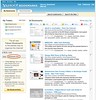
When I first came to the new Bookmarks Home page I was surprised to see all of the content. My expectation was it was going to be my old bookmarks that were included in My Yahoo! pages, which I update and are extensions of bookmarks from 1999. There was no clue on the page that the content had come from MyWeb 2, it took some digging and the "imported delicious" in my tags was the clue. There is no explanation how the bookmarks would be integrated into My Yahoo (I don't want my 2,400 some MyWeb bookmarks in My Yahoo).
The interface on Bookmarks Beta, while nice is difficult to find the sorts and folder/tag view modification as the typeface is very small. The "Sort by:" does not state was the default sort is. The sort is a toggle between date and title (presumably title by alphabetical sort, but my assumptions seem to be off on many things on the site).
The tools bar with view selection, add, edit, move, send, and delete was a little confusing. Some of the tools relate to making a check box selection in the bookmarked items, but that is not clear. While, other tools are not related (view selector and add). I easily understood view, add, edit, and delete were. Move has an icon that indicates moving out of a folder, but I was not clear where a "move" would put the selected items. Was it going to a folder, into My Yahoo sidebar, into del.icio.us, etc. Where was it moving things to? Send had similar problems as one could send by e-mail (should it state e-mail instead?) Why not use the really helpful convention in Yahoo! Local, which is really clear as to where things can be sent? Lastly, I found out that deleting something from Bookmarks removes the item from MyWeb 2 and that should not happen, unless it is made clear in the page that your bookmarks are being pulled from that repository, which Bookmark Beta fails to do.
Edit Bookmarks Broken
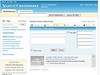
The Edit Form page was where I began to think that the Bookmark Beta was more an Alpha. I had first thought it was my using Firefox 2 as a browser, but the same if not worse problems also exist in my Safari browser. The edit bookmark screen is missing labels for the form fields, but it is also missing the existing content. It seems that this could be caused by relying on JavaScripting rather than a server generated page, as this page does not degrade well at all. Additionally the tag fields are empty, where the tag I want to edit should be. If the tag had been in the text box field I would have had a far more painful time separating the multi-term tag into its intended single term tags. Yahoo MyWeb 2 did this really well with a convention called commas. The social bookmarking site, Raw Sugar also uses this common convention and has wonderful affordance for assisting people with their comma separate string of tags. Having text box fields limits the ability for scaling, even if the interface populates the screen with a new text box when the five offered are filled it is still a really clumsy interaction it seems (I know Yahoo! test the living daylights out of their interfaces, which is a great thing, and I would love to know how this interface ended up in the public). Oddly, the one thing missing from this screen is the ability to add this bookmark into a folder. The new Bookmark tool is keeping the folders or is it not? Should not all of the possible interactions be available from the edit view?
Additionally, in a second view of the bookmark edit screen you will see the selected entry is not next to the bookmark edit screen. This likely means that the item being edited, if selected from the lower portion of the page, will not be anywhere near the editing box. There really must be closer. There is a lot of JavaScript being used on the page already, why not hide the items not selected for editing to provide a better proximity for people editing?
Bookmark Search Missing Items or Poor Sort
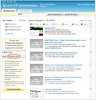
I tried "Search bookmarks" to get "tech" items. This search is supposed to query tags, titles, descriptions, etc. The resulting set was missing the first item from my default view, which is tagged "tech" is not in this set returned. This set is set for a sort order by date, which should put the item at the top of the returned set. This was something I really wanted to try in search as a similar returned set has been the result in MyWeb 2 and del.icio.us for at least a couple months. The algorithm is horribly off or the the sort is off. The good thing in the Bookmark Beta is it lets you know the sort order (the state in the default result is called out correctly),and lets you select a different sort order. Unfortunately, the search is broken as it is elsewhere. When I ran the search on tags (in the tag view portion of the page) the proper result set was returned with the most recently added item with a "tech" tag right at the top of the date order sort.
The labeling of the page and the type of search is missing from the page. The heading for the results states "Search Results 1-10 or 572", but it does not say what type of search I just ran. A proper heading should be should be "Search Your Bookmarks Results 1-10 of 572".
Add Bookmark Screen
This page has few oddities. The thing that stands out on this add bookmark page is the "My Tags" area. In the folder view of that content object you can drag-and-drop an item into a folder. The convention has been set that there is a drag-and-drop connection between that content object and my bookmarks. But in the tag view you can not drag one of the 20 tags into an empty (or filled) tag text field. The convention that was set, does not extend.
More troubling is the "My Tags" content object has find functionality stating "Type Tag here" in the text field next to the find button. When I have the add screen open I am not expecting that to take me to a new screen. Since the add tag interface does not have type ahead from by tag set, I would think had been hopeful that I could drop in a tag and have other related tags I have used on bookmarks would surface. What does get returned is a tag search result page and my add bookmark screen is blown away. I realize that the convention for what happens with tag search/find is already set, but since the convention for drag-and-drop is broken from folders, other things could be emergent as well.
All My Tags
This page is held back by poor labeling with the "All Tags" label, but it is actually "All My Tags" or some similar convention, as they are not all the tags from all of the users. The tags are semantically well structured in the XHTML as they are an unordered list, which is easy to parse mechanically or for accessibility reasons. The layout of the tags would benefit from having the list be full justified, which would provide a little more space around the tags leading to easier scanning of the page full of tags.
It is odd that the page has a handful of weighted tags, the flat list of tags alphabetically is easier to scan than a weighted tag cloud but these five tags that are most often used seems to be rather odd. I am quite happy not to see a full tag cloud.
Recommended Bookmarks

The Recommended bookmarks tab is the old unuseful default page from MyWeb 2, also known as the Interesting Today page. Ironically, there has never been anything interesting on this MyWeb 2 page. Yahoo Bookmarks has a really good clue as to what I find interesting (or any other person using the tool) or pay attention to, it is our bookmarks. We make an explicit statement each time we bookmark something as to what we have an interest in. This can easily be paired to find people who have bookmarked the same items (this identifies people who may be good sources for new bookmarks to recommend) and what vocabulary they have used to call that bookmark something (if they use the same terms to describe the bookmark it can be easily and most often correctly deduced that we do really have similar interests) and we have a few similar matches like this that person, their terms, and bookmarks can be used to build a list of things I would be interested in. If you take that list and parse it against things I have already bookmarked you will have a killer list of things to recommend me that I will care about. This can be server intensive, but the matching and pairing does not need to be done on the production server for the bookmarks, it can be chugging away in the background and serving up recommendations. This flows directly out of the presentation I have given to Yahoo! Tech Dev and have had many long discussions about at Yahoo! Since this is part of a public presentation I give all of competitors to Yahoo! have the information and most are putting it to use in various ways.
Wrap-up
Some of this seems harsh, but it is a public release by Yahoo! with a Beta moniker thrown on to it. But, much of this information Yahoo! already has as they have asked for the feedback before and received it. Things just don't get fixed. Some of these things are minor, but others are not details, they are big glaring errors. Yahoo has some of the best brains, designers, and developers on the planet and they should be producing products, even with Beta moniker that are not this rough. This is much closer to a Google product that is launched and is really rough around the edges and will likely not get fixed. At least I know with Yahoo things normally get ironed out, or at least they did.
None-the-less this has promise and it should be more accessible to regular people than MyWeb 2, but it seems really silly to throw out MyWeb 2 as it does many things better than del.icio.us, but del.icio.us does many things insanely well. Seeing the two products mixed will be a really tough challenge as it could easily break the fan base in del.icio.us or make a social bookmarking site like MyWeb 2 less approachable by putting a more geek-centric del.icio.us interface on it.
[I have added a follow-up to this focusing on the Yahoo! Roadmap for Social Bookmarking.]

Presenting at UIE Web Applications Summit
I am trying to improve my notification of what events I will be presenting. It is with this goal in mind I am letting you know the following... I will be at the UIE Web Application Summit: 21 January 2007 to 23, at the Monterey Marriott, Monterey, CA. I have always been impressed with the quality of the User Interface Engineering (UIE) events and I am delighted to not only attend, but present.
There is an early bird discount available for those who register by November 14th.
OZ IA Presentation - Folksonomy for IA is Posted
My just delivered presentation to OZ IA on, Folksonomy for IA (PDF 4.3MB).
Now it is time to focus on other's presentations and get then finally enjoying Sydney and the surrounding area. I am thinking of heading to Manley for the Jazz Festival on Monday.
Understanding Folksonomy: Tagging that Works presentation posted
I have finally posted my Understanding Folksonomy: Tagging that Works (4MB PDF) presentation from d.construct. I have been presenting the content in this for nearly 2 years and have been iterating it. I have been wanting to get the Folksonomy Triad out in public as it has been getting really strong response in the 18 months that I have been using it (in the last 9 months I turned it into an animation that really drives the point home). I have not done a movie of the presentation yet, but that could be coming in the next few months.
I have not been posting the presentations, as the size has been increasing and when they get blogged elsewhere the bandwidth shoots up. But, I have been playing with Amazon S3 to store these files at lower cost and eat less bandwidth. I have been playing with the Python and Ruby scripts, but when Jeff Barr demonstrated the S3 Firefox Organizer I knew it was made really simple to upload, set permissions, and grab a sharable URL.
Trip and d.construct Wrap-up
I am back home from the d.construct trip, which included London and Brighton. The trip was very enjoyable, the d.construct conference is a pure winner, and I met fantastic people that keep my passion for the web alive.
d.construct
The d.construct conference had Jeff Barr from Amazon talking about Amazon Web Services, Paul Hammond and Simon Willison discussing Yahoo and its creation and use of web services for internal and external uses, Jeremy Keith discussing the Joy of the API, Aral Balkan presenting the use of Adobe Flex for web services, Derek Featherstone discussing accessibility for Javascript and Ajax and how they can hurt and help the web for those with disabilities, myself (Thomas) discussing tagging that works, and Jeff Veen pulling the day together with designing the complete user experience.
Jeff Barr provided not only a good overview of the Amazon offerings for developers, but his presentation kept me interested (the previous 2 times my mind wandered) and I got some new things out of it (like the S3 Organizer extension for Firefox.
Jeremy was his usual great presenting form (unfortunately a call from home caused me to miss the some of the middle, but he kept things going well and I heard after that many people learned something from the session, which they thought they knew it all already.
Paul and Simon did a wonderful tag team approach on what Yahoo is up to and how they "eat their own dog food" and how the Yahoo Local uses microformats (Wahoo!).
Aral was somebody I did not know before d.construct, but I really enjoyed getting to know him as well as his high energy presentation style and mastery of the content that showed Flash/Flex 2.0 are fluent in Web 2.0 rich interfaces for web services.
Derek was fantastic as he took a dry subject (accessibility) and brought it life, he also made me miss the world of accessibility by talking about how JavaScript and Ajax can actually improve the accessibility of a site (if the developer knows what they are doing - this is not an easy area to tread) and made it logical and relatively easy to grasp.
I can not comment on my own presentation, other than the many people what sought me out to express appreciation, and to ask questions (many questions about spamming, which is difficult if the tagging system is built well). I was also asked if I had somebody explain the term dogging (forgetting there was a rather bawdy use of the term in British culture and using the term as those people who are dog lovers - this lead to very heavy laughter). Given the odd technical problems at the beginning of the presentation (mouse not clicking) things went alright about 5 minutes or so in.
Lastly, the man I never want to follow when giving a presentation, Jeff Veen rocked the house with his easy style and lively interaction with his slides.
I am really wanting to hear much more from Aral and Derek now that I have heard them speak. I am looking forward to seeing their slides up and their podcasts, both should be posted on the d.construct schedule page.
London Stays
The trip also included an overnight stay in London on the front and back end of the conference. Through an on-line resource I had two last minute rooms booked at Best Western Premiers that were great rooms in well appointed hotels. The hotels even had free WiFi (yes, free in Europe is a huge savings), which was my main reason for staying at these hotels I knew nothing about. I really like both locations, one near Earls Court Tube Station and the other Charing Cross Road and SoHo. The rooms were well under 200 U.S. dollars, which is a rarity in central London. I think I have a new place to track down then next time I visit London.
London People & Places
I had a few impromptu meetings in London and an accidental chat. When I first got in I was able to clean-up and go meet friends Tom and Simon for lunch at China Experience. We had good conversations about the state of many things web. Then Tom showed me Cyber Candy, which I have been following online. I was then off to Neal's Yard Dairy to pick-up some Stinking Bishop (quite excellent), Oggleshield, and Berkswell. I then did a pilgrimage to Muji to stock up on pens and all the while using Yahoo Messanger in a mobile browser (a very painful way to communicate, as there is no alert for return messages and when moving the web connection seems to need resetting often).
That evening I met up with Eric Miraglia for a great chat and dinner, then included Christian Heillmann (who has a great new book (from my initial read) on Beginning JavaSctipt with DOM Scripting and Ajax) in our evening. The discussions were wonderful and it was a really good way to find people of similar minds and interests.
On my last day in London I ended up running into Ben Hammersley as he was waiting for a dinner meeting. It was great to meet Ben in person and have a good brief chat. Somehow when walking down the street and seeing a man in a black utilikilt, with short hair, and intently using his mobile there are a short list of possibilities who this may be.
Food
My trip I had a few full English breakfasts, including one in Brighton at 3:30am (using the term gut buster), which was my first full meal of the day. The breakfast at the Blanche House (the name of the hotel never stuck in my head and the keys just had their logo on them, so getting back to the hotel was a wee bit more challenging than normal) was quite good, particularly the scrambled eggs wrapped in smoked Scottish salmon. The food the first night in Brighton at the Seven Dials was fantastic and a great treat. Sunday brunch at SOHo Social in Brighton was quite good and needed to bring me back from another late night chatting, but the fish cakes were outstanding. The last evening in London I stopped in at Hamburger Union for a really good burger with rashers bacon. The burgers are made with only natural fed, grass-reared additive free beef. This is not only eco-friendly, but really tasty. I wish there were a Hamburger Union near where I work as I would make use of it regularly.
Too Short a Visit
As it is with nearly every trip this year, the time was too short and the people I met were fantastic. I really met some interesting and bright people while in Brighton and I really look forward to keeping in touch as well as seeing them again.
WebVisons and MIT TechReview
Back from WebVisions
I am back from WebVisions in Portland, Oregon (the most enjoyable city in the U.S. for me) where I presented on Tagging in the Real Web World (my slides will be available at the end of this week). I loved WebVisions again as it is a great developer/designer to developer/designer conference with people sharing methods and frameworks with others to raise the level of everybody. It is a wonderful open sharing conference in the spirit of SXSW Interactive on a little more manageable scale.
MIT Technology Review Mentions Personal InfoCloud
I came back to a really nice mention in the MIT Technology Review article by Wade Roush on The Internet Is Your Next Hard Drive, which points to the Personal InfoCloud as its framing idea. I am increasingly seeing people wanting to store and have access to information across devices and services (or control their own destiny, as Gina Tripiani wants). It is about personal choice where and how their data, information, and media is stored. We are wanting continual access to the information, but may not want or have continual access to the internet or may not want it stored on us. Wade's article brings up some interesting options for those that want some or all of their storage on-line. It is time to dig into these options and see how close they get from a Personal InfoCloud perspective and personal aggregation, when we want and need the information at our finger tips (you know, the technical nirvana we have always dreamed and talked about).
Preparing for Web Visions and Other Stuff
Things have been quiet around here as I have been working on my 'Tagging in the Real Web World' presentation for WebVisions in Portland, Oregon (you are going aren't you?), bring on some new clients at InfoCloud Solutions, and working on longer (okay, my normal length) pieces for Personal InfoCloud and some other places that flesh out single slides from recent, and not so recent presentations.
The Tagging in the Real Web World is a new presentation, it has a handful of slides from recent folksonomy presentations that helped the tagging light bulb click. I am not fully focussing on folksonomy, but looking at tagging services and tagging that is being included in other web services.
In September, I will be doing a deeper dive into Understanding Folksonomy at d.Construct in Brighton, England. More on this a little later, but you should note tickets go on sale (they sold out in 30 minutes last year) Tuesday, July 18th at 10am (GMT).
Memephoria
While I was responding to a friend's e-mail about another large corporation using the term folksonomy I realized that at the moment I do not care if somebody is using it correctly (often people use it to mean tagging -- not tagging that actually works or to mean a tag cloud (the things that are cute but provide little value)). I realized that on the path of a term becoming a buzz word it gets adopted by those who have a case of memephoria.
Memephoria is the state of believing that spreading the latest meme as a mantra will earn you transcendence. Memephoria does not require one to understand the term used in the meme mantra, just to use it (correctly or in-correctly).
Expansive Web 2.0 Conference List
Eric Weaver has put together a killer list of upcoming conferences for Web 2.0 related subjects. Now to get this list in Upcoming.
Live Data Could Solve the Social Bookmarking Problem with Information Volatility
Alex brings up something in his Go and microformat stuff! covering what is in the works with Microformats at Microsoft. Scroll down to where Alex talks about "mRc = Live data wiring", now this live data access is incredibly important.
One of the elements that has been bugging me with social bookmarking it the volatility of the information is not taken into account when the bookmark is made. No, I am not talking about the information blowing up, but the blood pressure of the person bookmarking may rise if the data changes in some way. I look at social bookmarking, or bookmarking in general as a means to mark a place, but it fails as an indicator of state or status change of the information we are pointing to. The expressing of bookmarking and/or tagging is an expression of our explicit interest in that object we bookmarked and/or tagged. The problem is our systems so far are saying, "yes, you have interest, but so what".
What the live data approach does is makes our Personal InfoCloud active. If we could bookmark information and/or tag chunks of information as important we should be able to find out when that information changes, or better get an alert before the information changes. One area where this is essential and will add huge value is shopping. What happens with products in the real world? The prices change, they go out of stock, the product is modified, production of the product stopped, etc. The permeations are many, but those expressing interest should be alerted and have their information updated.
One of the things I have been including in my "Come to Me Web" presentations is the ability to think about what a person needs when they use and want to reuse information. We read about a product we desire, we read the price, but we may think about the product or put it on a wish list that is related to an event in the future. When we go to act on the purchase the information we have gathered and bookmarked may be out of date.
One solution I have been talking about in my presentations is providing an RSS/ATOM feed for the page as it is bookmarked so the person gets the ability to get updated information. I have built similar functionality into past products years ago that let people using data know when the data changed (e-mail) but also provided the means to show what the data was prior and what it had changed to. It was functionality that was deeply helpful to the users of the system. Live data seems a more elegant solution, if it provides the means to see what information had changed should the person relying on or desiring the information want it.
Upcoming Conferences I am Presenting at and Attending
Okay, things have been quite busy here. But, here will be changing as I am hitting the skies a bit in the short term. This means I may be near you so reach out and we can hang out and chat. I am completely looking forward to all the places on my schedule and seeing all of the people.
XTech
I am off to Amsterdam, Netherlands (no not that other one) this week to speak at XTech. I will be presenting Developing for the Personal InfoCloud on Thursday at 11:45 in the morning.
BarCamp Amsterdam
On Saturday I will be attending BarCamp Amsterdam for part of the time.
Seattle Area
Following the Amsterdam trip I should be in the Seattle area for work. I don't have dates as of yet, but if you shoot an e-mail I will be sure and connect.
Microlearning 2006 Conference
I will be heading to Innsbruck, Austria for the Microlearning Conference and preconference (June 7). I will be talking about microcontent in the Personal InfoCloud and our ability and desire to manage it (one means of doing this is folksonomy, but will be discussing much more).
Following Innsbruck I may be in Europe a bit longer and a little farther north. I will be in Amsterdam just following the conference, but beyond that my schedule has not yet fully jelled.
WebVisions 2006
I will be heading to WebVisions 2006 in Portland, Oregon July 20th and 21st. I will be speaking on Friday the 21st about Tagging in the Real World. This will look at how people are making use of tagging (particularly tagging services) and looking at the best practices.
The Fall
In September it looks like I will be in Brighton, UK for a wonderful event. I should also be in Australia later in September for another conference.
As these events get closer, I will be letting you know.
Yes, I know I need to be publishing this information in hCal, but I have been quite busy of late. But, I am moving in that direction very soon. You can also follow what I am watching and attending in Upcoming for vanderwal.