Harried Holiday
This has been a hectic and food filled holiday season. The highlights so far (still a week to go) include a trip across country to spend an early Christmas with my parents and Grandmother and one of Joy's sisters. Left Thursday after work and returned across country Sunday (yes we are still living in the US and not England or the Netherlands, which would make a cross country trip a little more sane).
Tuesday after work (out at 1pm) it was a train up to NYC. Arrived in Manhattan's Penn station to 8 taxis and just three fares (asking myself if this was still New York). Arrive at Joy's sister and husbands apartment, change clothes and head to Bay Head Brooklyn for Christmas eve dinner. Dinner was great at the Joy's brother-in-law's sister's house, which included 6 or seven courses of stuffed mushrooms, seven layer eggplant parmesean (to die for), mussels in a dill cream sauce, jumbo shrimp in a tarragon vodka tomato cream sauce, marinated calimari and octopus salad, swordfish with a jerk rub and mango chutney, salmon en crote with a cream horseradish sauce with green salad, and Italian pastry assortment for dessert. We left in a new snow falling back for Manhattan after midnight.We had a "toilet incident" that put us out on the streets of Manhattan at 1:30am Christmas morning looking for a plunger (the building could not locate the one they have for a 23 story building. We tried bodegas, one Duane Reed (wagged their finger at us for wanting a plunger and pointed us to the Liquid Plummer, which we purchased). We got back to the apartment to read, "Not for toilets" on the bottle. So we tried the building across the street, which had one for us to borrow and the maintenance guy would not take our $15 holiday gift offer (If we move to NYC we are going to look at the Mondrian just because of this graciousness, bless them). At 2:45am I was able to go to the bathroom, which I had been holding since Brooklyn as I thought I could hold it and I was being a gentleman and trying to be a gracious husband (this all may be reconsidered at a later date).
Christmas morning we woke at 9am or so and had coffee and eggs then opened gifts with in-laws. This was quite relaxing. We changed and went to go to church a couple blocks away. We prepared for the rain, but not completely for the torrential downpour, which had us soaked from the mid-thigh down upon arriving at the church. The services was nice and the modern architecture wonderful to look at as it cast great shadows and provided enjoyable plays with the light. After church we went back and changed to dry clothes and I helped a little with the rack of lamb (good to keep in mind it is 450 degrees Fahrenheit for 15 minutes not 325 as well as stronger encouragement to keep the oven door shut -- broad cookbook like Joy of Cooking is a needed gift for that house or even for me to travel with. We finally ate wonderful lamb and mashed potatoes (appearantly they had their own adventure the previous day).
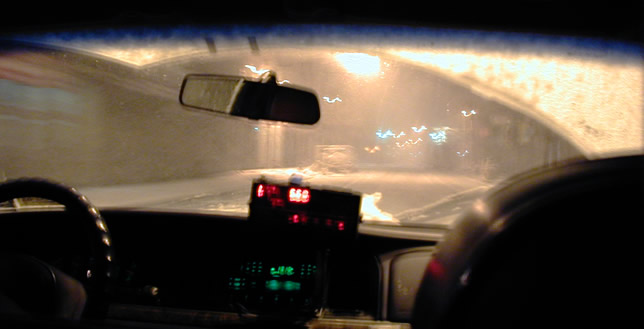
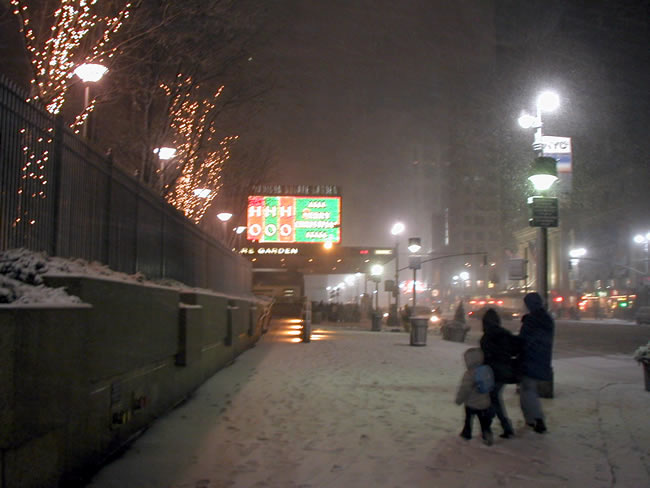
We were catching the 6 o'clock train back to DC, which was now going to be in a serious snow storm. We left the building and the wonderful hospitality to hop into a cab (yes the subway is down one long block and down a short block, but there was one or two inches of snow and we had wheelie bags). The taxi did fine until the mid-forties going down 2nd Avenue where stopping and starting turned challenging. We finally made it to Madison Square Garden and Penn Station. The train ride was quiet, but we did have to stop to knock ice off the bottom of the train.
Once home we have had a brother-in-law staying with us as their house is still undergoing serious remodelling (he moved back home last night). On Friday we had a wonderful dinner with friends at Local 16 on U Street, NW in DC. The food was quite good (the white bean soup was a little too salty, but the jerk chicken pasta and mahi mahi were great. This weekend has been a weekend filled of more errands than one could dream of (although Sutton Gourmet in Bethesda had a wine, champagne, and port tasting in their store on Saturday covering 35 to 45 offerings and I found a couple to buy and a few to add to my wish list that will make great pairings). I did get to use my new KitchenAid stand mixer to make a thin pear pound cake (out of Patricia Wells Bistro cookbook), which turned out wonderfully with a dollop of whipped cream scented with pear brandy on top. This followed a potato leek soup, which I have been craving and not made for a few years now.
Soon we are back off heading south to meet up with more parents and three kids and a brand new puppy. I may have hide for the month of January to recover.